

Conscious consumption means understanding the story behind each piece — who made it, what materials were used, and under what conditions it was produced. With the recent ascent of awareness among contemporary conscious consumers, there has been a corresponding climb in the availability of eco – friendly products on the market. Modern Macramé décor and accessories by House of Macrame fit the bill if you are resolving to tie a knot with tradition, and to stand out while you fit in this New Year! After all, modern – day society has learnt an essential lesson by blending the old with the new, namely – progress does not require erasure.
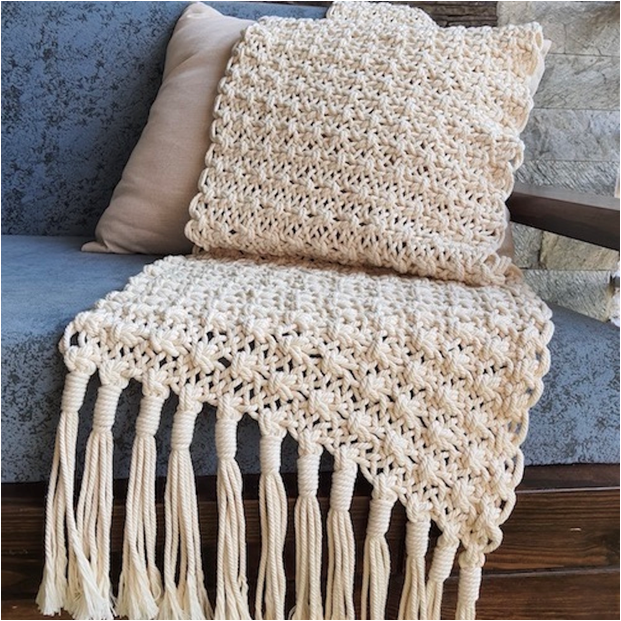
The macramé craft is believed to have originated with Arab weavers in the 13th century, who used decorative knots — called migramah ( meaning fringe ) — to tie up the loose ends of woven textiles, like towels, shawls, and veils. In addition to being ornamental, these knots prevented the fabrics from fraying, thus beautifully tying form and function together with rhythm and symmetry.
During long voyages, the Arab sailors would tie ropes together in knots to pass the time, creating belts, hammocks, and decorative pieces that they later traded or sold in ports across Europe, Africa, and Asia. This is how Macramé quietly bound itself into various foreign cultures. Over the years, the Macramé craft ebbed and flowed in popularity until it experienced a significant resurgence in the 1970s, when it became a strong symbol of the Boho Movement. Today, Macramé craft has come a full circle, celebrating handmade imperfection and creative freedom.
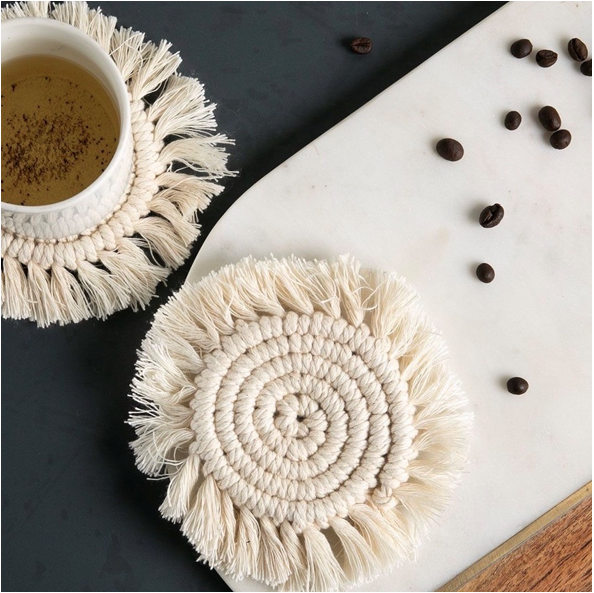
As modern – day artisans intricately entwine sustainable Macramé cords made of cotton or hemp, they not only create handcrafted, textured masterpieces, but also weave a tapestry of social and economic empowerment. They begin by attaching lengths of cord to a base (a dowel, ring, or branch), then weave fundamental knots — square knots, half – hitches, double half – hitches, gathering knots, etc — into complex patterns. Each knot builds upon the last, creating flowing fringes, geometric shapes, feathers, moons, trees, or cascading layers that flawlessly flow in mesmerising patterns. With nimble fingers and tireless imagination, these artisans can create anything from Macramé dreamcatchers to table – runners.
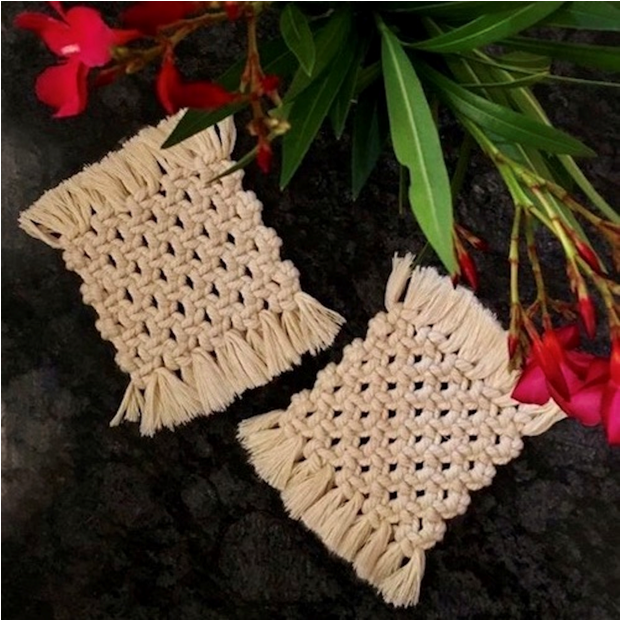
Among the myriad eco – friendly traditional craft practices, Macramé emerges as a paragon of sustainable artistry. This mesmerizing technique not only champions environmental preservation, but it also sustains the communities of innumerable Artisans who are not forced to choose between survival and authenticity; instead, they evolve. Their skills, refined over centuries, gain new value when applied to the present – day requirements. Craft becomes a livelihood again – not charity – and creativity becomes a shared language between creators and consumers. And it is this shared language that motivates the artisans of the House of Macrame to create minimalist utility pieces along with décor items using the traditional Macrame craft.


